


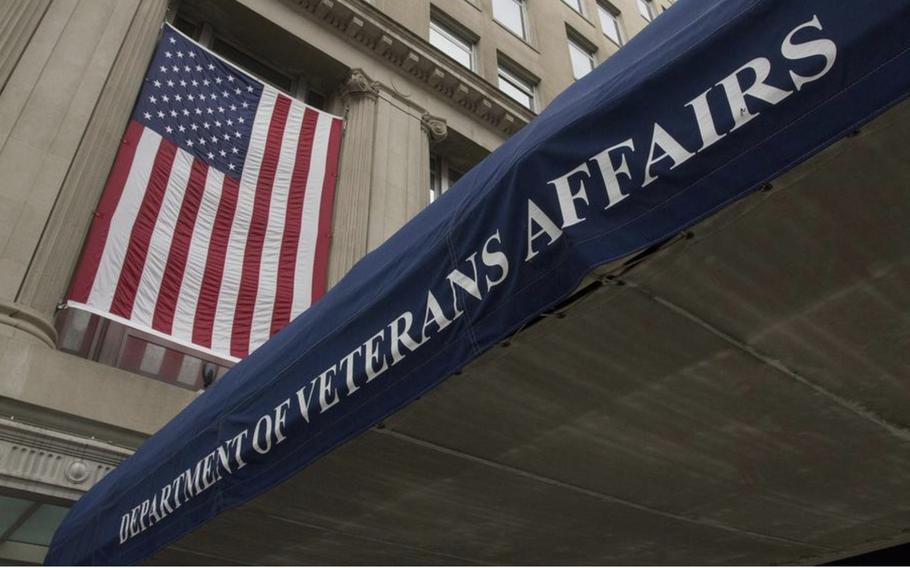
The VA operates more than two dozen federal advisory committees that invite the public, including veterans and researchers, to give the agency feedback on specific issues, including women’s health care and Gulf War exposures. Some veterans are complaining that the VA has stopped scheduling regular meetings and filling vacancies. (Stars and Stripes)


WASHINGTON — Army veteran Ronald Brown has been waiting for two years for the Department of Veterans Affairs to renew his appointment to a stakeholders committee that advises the VA secretary on finding a cure for Gulf War Illness.
But the VA’s Research Advisory Committee on Gulf War Veterans’ Illnesses, created by Congress, convened only once in 2026 and then canceled a second meeting in September for lack of a quorum, Brown and other former members said.
“Seats are not being filled. Veterans and researchers whose terms expired were not approved for another term and rotated off the committee,” said Brown, who volunteers as a toxic wounds consultant for Vietnam Veterans of America.
The VA has not acted on Brown’s reappointment, nor has it filled other vacancies, making it difficult for the full advisory committee to meet on a regular basis, current and former members said.
The VA operates 27 federal advisory committees, which are composed of stakeholders, including veterans, caregivers, consumers, subject matter experts and other private citizens who offer advice, feedback, and policy recommendations to the VA leadership and Congress.
Congress authorized 18 of these committees, including panels on veteran homelessness, cemeteries and prosthetics.
But a review of the committees’ websites shows that fewer than half had meeting minutes published in 2026.
“When my three-year term expired, I was fully expecting reappointment given my unique background and impact on the Research Advisory Committee on Gulf War Illnesses. That has not happened,” said Thomas Mathers, an Army Gulf War veteran whose term expired in 2025.

Thomas Mathers, who flew Apache helicopters during the Gulf War, is questioning why the VA has ignored his formal requests to continue serving on a citizens’ advisory panel on Gulf War Illness. Mathers said that the congressionally authorized committee has stopped meeting. (Thomas Mathers)
Mathers, who leads a Massachusetts pharmaceutical company, said that he recently learned that the committee he served on has dwindled to four members.
By charter, the committee is supposed to have 14 members, current and former members said.
“I was the only veteran with a background in pharmaceutical development to serve on the committee. I felt that my feedback on research proposals was making a meaningful difference,” Mathers said.
Mathers noted that the committee successfully advocated during his first term for a diagnostic code for Gulf War Illness, which the CDC approved in 2025.
Other VA stakeholder advisory committees also report delays and cancellations of meetings that are designed to give the VA feedback on issues affecting specific populations, including women, minorities and the elderly.
“The VA is always recruiting candidates for membership in its federal advisory committees, including the Research Advisory Committee on Gulf War Veterans’ Illnesses and the Advisory Committee on Women Veterans,” said Quinn Slaven, VA press secretary.
He said that those interested in pursuing VA federal advisory committee opportunities should email their resume and cover letter to vaadvisorycmte@va.gov.
He did not discuss why some committees have not been meeting.
Dr. Gregg Meyer is a physician at Massachusetts General Hospital and served as chairman of the VA Special Medical Advisory Group.
The committee’s role is to advise the VA on the care and treatment of veterans and on other matters related to operations at the Veterans Health Administration.
But Meyer, a military veteran and professor at Harvard Medical School, said that he was asked to step down from that role.
“I was given no explanation, nor was there any information about whether this congressionally mandated federal advisory committee will continue to function,” he said.
The last time the committee met was in August 2025, according to the minutes on its website.
“To my knowledge, there has been radio silence about the future of the committee,” Meyer said. “This is incredibly disappointing because as a veteran, I know the [committee] provided useful advice on the direction of the VA health system. No longer having that voice is a loss for veterans and our country.”
Under the Federal Advisory Committee Act, the VA is responsible for approving, scheduling and structuring the meetings. The VA appoints members and fills vacancies.
Like other advisory committees to federal agencies, they do not have uniform meeting mandates. They operate under shared federal standards and individual charters, according to the U.S. General Services Administration.
But without a full roster of active members, committees may lack the quorum and administrative standing to execute their legal charter, current and former members said.
Wanda A. Wright, a retired Air Force colonel, resigned in April as chairwoman of the Advisory Committee on Women Veterans after claiming that the VA had stopped scheduling meetings.
Several Democratic lawmakers recently signed a letter to VA Secretary Doug Collins complaining that the committee had not met for nearly two years and did not submit legally required annual reports to Congress for 2025 and 2026.
Wright said that the VA “effectively rendered the committee inactive,” preventing it from fulfilling its duties, wrote Reps. Maggie Goodlander, D-N.H., and Veronica Escobar, D-Texas, who led the letter-writing campaign.
“Veterans and their families, caregivers and survivors deserve nothing less than a clear accounting of why the Advisory Committee on Women Veterans has been allowed to fall silent and what the department will do to restore these critical perspectives to the table,” according to the letter, signed by 10 lawmakers.
Wright said on Wednesday that she felt she had no other choice but to resign.
“The VA was not meeting its congressional obligation by scheduling meetings. I couldn’t see myself being on that committee in name only. For us to sit and do nothing was not right,” she said.
Mathers, chief executive officer of Aer Therapeutics, noted that the VA had continued until this month to incorrectly list him and other former appointees as active on the website.
“I cannot even get a response to my application for reappointment,” said Mathers, who was an Apache helicopter pilot and platoon leader during military service.
Brown, who has a diagnosis of Gulf War Illness, said he has not given up trying to return to the committee.
He has submitted his application three times in the past two years for reappointment and continues to await a decision.
“The VA needs veterans on that committee who served in the Gulf War and have service-connected health issues. They bring a perspective to the committee that it would not have otherwise,” Brown said.
Brown also continues to participate on a veteran engagement subpanel of the committee, which met last weekend to collect comments from Gulf War veterans on their benefits and services.
But Brown said that the subpanel cannot send its findings from that forum to the Research Advisory Committee on Gulf War Illnesses, until there is a quorum to receive it.
“Veterans have been impacted by Gulf War Illness now for 36 years. We’re hoping that veterans’ voices on the committee will continue to be heard and make a difference in finding a treatment or cure,” Brown said.



STARS AND STRIPES VIDEOS
AROUND THE WEB
STRIPES TOP NEWS


