


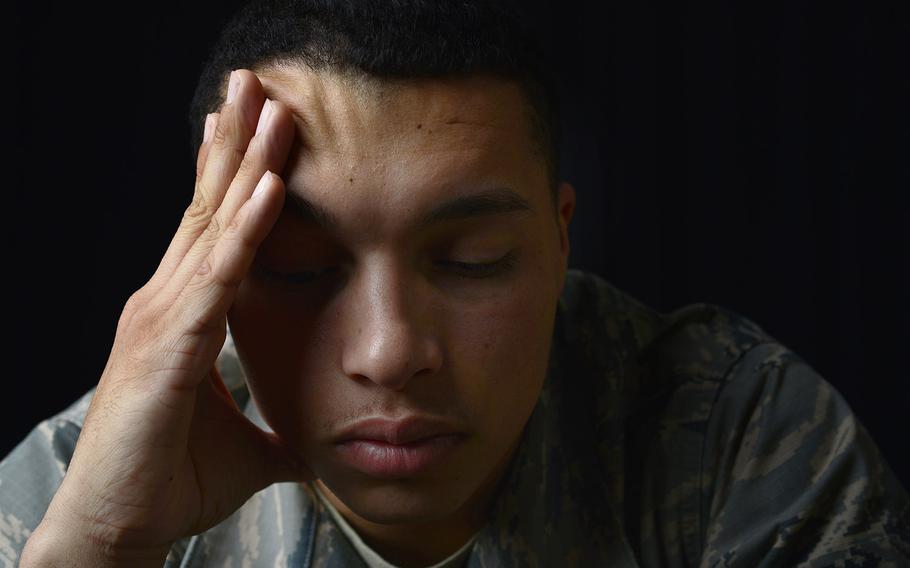
Post-traumatic stress disorder is a significant or extreme emotional or psychological response to a shocking or dangerous or traumatic event. It affects approximately seven percent of the United States population and nearly 12-18% of combat veterans deployed to Iraq and Afghanistan. (Christian Clausen/U.S. Air Force)


ABOUT THE AUTHORS: Owen Muir, MD, DFAACAP, is chief scientific officer of Radial. Tobias Marton, MD, PhD, is chief medical officer of Radial. Dr. Marton founded and directed the San Francisco VA rTMS clinic. He has provided intravenous ketamine treatments to more than 120 severely depressed veterans across over 2,000 infusions and has published several studies reporting clinical outcomes.
The best way to prevent veteran suicide is with treatments that eliminate thoughts of self harm, depression and post-traumatic stress disorder. We haven’t gotten there yet. About 18 veterans kill themselves every day. They’re 58% more likely to die by suicide than the civilian population. Reliving the trauma of war leaves too many veterans suffering long after they leave service.
The distressing symptoms of PTSD grip veterans when they are reminded of the battlefield, or other traumatic events in their life. Our country’s outdated health insurance coverage rules prevent the people fighting for our safety from getting the care they need to end this pain.
On average, 7% of all veterans suffer from PTSD. That figure goes up depending on when they served, with nearly 30% of those who served in operations Iraqi Freedom and Enduring Freedom experiencing symptoms at some point.
In their lives, PTSD can present as unrelenting nightmares making a mockery of “a good night’s sleep.” Mistaking fireworks or thunder for gunshots. Daily distress and intermittent panic haunts relationships, work and routines. A nagging lack of joy and a looming sense of dread are common. Triggers are unpredictable and hard to be free of without effective psychiatric care.
Who are those suffering? We know them well. We’re both psychiatrists. One of us was a psychiatrist at the San Francisco VA, working with veterans who tried to get care for their PTSD or depression — and saw those conventional treatments not work. We know what lurks behind that “ready for anything” look.
In the early 2000s, when millions of service members were deployed in the aftermath of 9/11, there were limited options for PTSD treatment. Cognitive behavioral therapy and selective serotonin reuptake inhibitors (SSRIs) like Zoloft were offered. The potential for remission with those treatments was — and remains — limited.
Today, there are actually effective treatments available. However, the ones used back then are still the first-line treatments offered to most people with PTSD. They didn’t work especially well then, and, though they may relieve some symptoms, they still don’t achieve remission for 70% of patients.
That’s because health insurance coverage hasn’t caught up with the latest in PTSD care. Most plans are still using decades-old studies as their standard for coverage, despite growing peer-reviewed evidence on a new class of neuromodulation treatments, collectively known as brain medicine, which target and heal the pathways in the brain that cause mental disorders.
Often, patients who receive brain medicine treatments see transformative results. A patient comes to mind, and we’ll share his story with permission. Fergal “Ferg” Foley is a retired Army officer. He served in active duty in the 1970s, and experienced PTSD after. While later serving in the National Guard in New York, he supported rescue and recovery efforts on 9/11. He was the ranking officer in NYC when the planes hit the towers. It exacerbated his PTSD. He tried everything in the years following to relieve his symptoms: medication, talk therapy, and more. But the only thing that worked? Transcranial magnetic stimulation (TMS), a non-invasive treatment that uses magnets to rewire the pathways in the brain that lead to PTSD in the first place. After his first treatment, he felt noticeably better than he had for most of his adult life. A few TMS sessions later, he reached remission.
Ferg’s story could be shared by many more veterans and others suffering from PTSD. We’re seeing some positive steps forward. For example, California lawmakers recently passed a bill to fund research into psychedelic therapy — another brain medicine approach — for veterans with treatment-resistant mental health conditions. The president signed an executive order directing federal agencies to move promising treatments, like the psychedelic Ibogaine, forward.
Those efforts will take years. But even if all the science meets our wildest hopes? The ball is in payors’ court to change the coverage landscape to one that prioritizes lifesaving brain-medicine-led care for our country’s heroes and those they fight for.
Conveniently, the Centers for Medicare and Medicaid Services already has a blueprint to do just that.
President Richard Nixon signed the Social Security Amendments of 1972, which granted anyone with end-stage renal disease (ESRD) full Medicare coverage for lifesaving dialysis and kidney transplants, regardless of their age. This was the first time a law allowed anyone with a specific diagnosis to enroll in Medicare, which is usually restricted to those over age 65. While there are waiting lists for treatment, the pathway has helped thousands of individuals get care they need to survive kidney failure. The most recent data shows 63% of ESRD patients were receiving hemodialysis and 30% have received a functioning kidney transplant. Kidney medicine has come a long way.
The Social Security Amendments of 1972 worked for ESRD. CMS should take a similar approach to PTSD care to give millions of Americans a chance at remission.
The groundwork is in place. PTSD is a single diagnosis like ESRD, making it easy to verify eligible patients. Tricare already covers TMS for adults with depression, the first step to broader coverage for veterans. Effective therapies are already FDA-cleared, like Prism, which retrains the brain networks to master fear. This means emotional responses occur out in one’s life that better control PTSD symptoms. Studies show after eight weeks of treatment, more than 80% of patients achieve a significant reduction in symptoms and over 30% reach remission.
TMS, with one FDA-labeled approach for Wave Neuroscience and likely more on the way, shows remission rates of nearly 50% in clinical studies. It’s already FDA cleared and covered by insurance for treatment-resistant depression, where it drives remission in nearly 80% of patients.
The effort required now is getting plans to review the growing body of evidence of neuromodulation treatments for PTSD, then activate a framework to bring them to patients quickly and affordably. Following CMS’s example with ESRD is a place to start.
Veterans make a sacrifice none of us civilians can fully comprehend. It’s unconscionable that they’re left to endure the trauma of war daily without hope of long-term relief. The treatments to give them that hope and prevent veteran suicide exist. We have an ethical imperative to use them — both for those who served us then and for those that might tomorrow, if only their PTSD were addressed.
STARS AND STRIPES VIDEOS
AROUND THE WEB
STRIPES TOP NEWS


